Too Young, Too Old, or Eating More Than You Think
Two women told us their stories in September.
One was told at 42 that she was too young for anyone to look into it. The other, in her fifties, was told her metabolism just slows down and she's kind of stuck with it.
Too young to take seriously. Too old to bother with. Same closed door, opposite reasons.
Maybe you got a third version. "It's normal." "Your numbers look great." Or our least favorite: "You must be eating more than you think." One woman heard that last one while she had every bite logged in an app on her phone.
That's the laziest answer in the building. It puts the problem right back on you, and it gets the appointment done on time.
So what's actually going on? Your body may be responding differently now. Through perimenopause and menopause, estrogen shifts, sleep gets lighter, and muscle gets harder to hold on to. Less muscle can mean less strength and a body that burns a little less at rest.
So most women do the thing that worked at 30. They eat less. Then less again.
A woman told one of our dietitians exactly how that went. She cut the bread at lunch. Then the olive oil. Then the peanut butter. The scale went up anyway. "I'm hungry all the time," she said. "I don't have a lot of energy. My workouts are getting harder."
Another woman, a nutritionist herself, wrote in a Facebook group that at 46 she fell asleep while walking on a treadmill. She knew food better than most of us, and she was still doing all the same things that had stopped working.
Tired is information. Most of us were never asked about it. We were told to push through, but tired has a reason.
So quit running the plan that worked at 30. Menopause weight loss is about losing fat while keeping, or even building, muscle. Different body, different plan.
The Simple Plan, Built Around You
We never hand two women the same plan. Your dietitian builds yours around your food, your schedule, your family, your labs, and your week, then rebuilds it every seven days from your own numbers.
Under every plan we build, you'll find the same four habits. Nothing crazy. Nothing you have to white-knuckle.
Habit 1 of 4
Protein at every meal
Protein helps you hold on to muscle while you lose fat. It also keeps you full, which matters when you're eating a little less.
Aim for a solid serving at each meal. Think a palm or two of chicken, fish, eggs, Greek yogurt, cottage cheese, tofu, or lean beef. For many women, that lands somewhere around 25 to 40 grams per meal. Your exact number depends on your size, activity, and health, and a registered dietitian can help you set it.
Habit 2 of 4
Strength training 2 to 3 times per week
Lifting tells your body to keep its muscle.
It does not have to be long or complicated. A squat, a push, a pull, a hinge (like a deadlift or hip bridge), and a carry cover most of what you need. Dumbbells at home count. Machines at the gym count.
Caryn's doctor told her not to bother, because metabolism slows down. She's close to 20 pounds down with us, she lifts more now than she ever has, and she and her husband Mark ride 20 to 25 miles on their bikes. In her words: "I am passing people half my age really without a lot of effort."
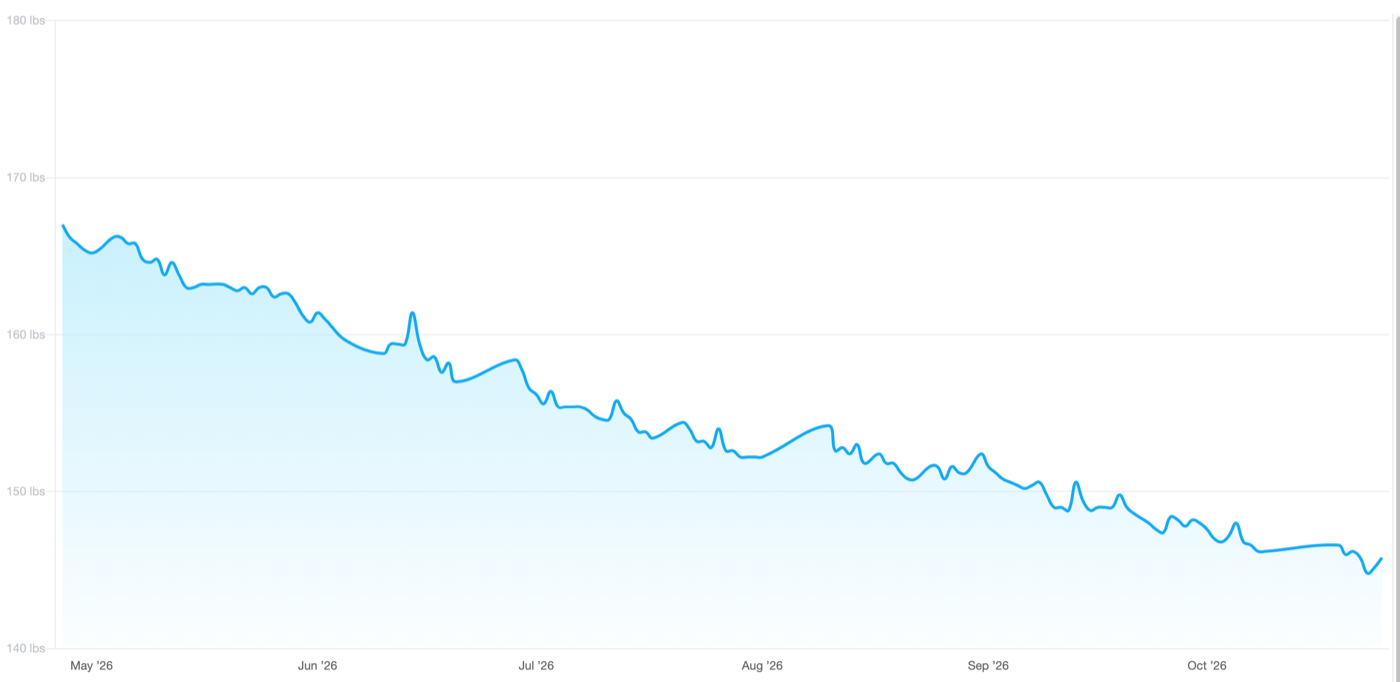
Lifting 2 to 3 times a week is very unlikely to make you bulky. It builds strength.
Habit 3 of 4
Move every day
Walk. Garden. Take the long way through the parking lot. Daily movement burns energy, helps with blood sugar, and lifts your mood. Twenty to thirty minutes most days. If you'll still be doing it next year, it counts.
Habit 4 of 4
Protect your sleep
Short sleep makes you hungrier and makes cravings louder. It also makes it harder to recover from your workouts.
Try a steady bedtime and a cool dark room. If night sweats or hot flashes keep waking you up, bring it up with your doctor. There may be options that help.
Go slow and steady
Renee is 53. She ran the Disney Dopey Challenge, four races in four days, while losing weight with us. The last time she dieted, she couldn't eat dinner with her kids. This time her dietitian told her to sit down and eat with her family.
Her summary of the whole thing: "It was simple, not easy."
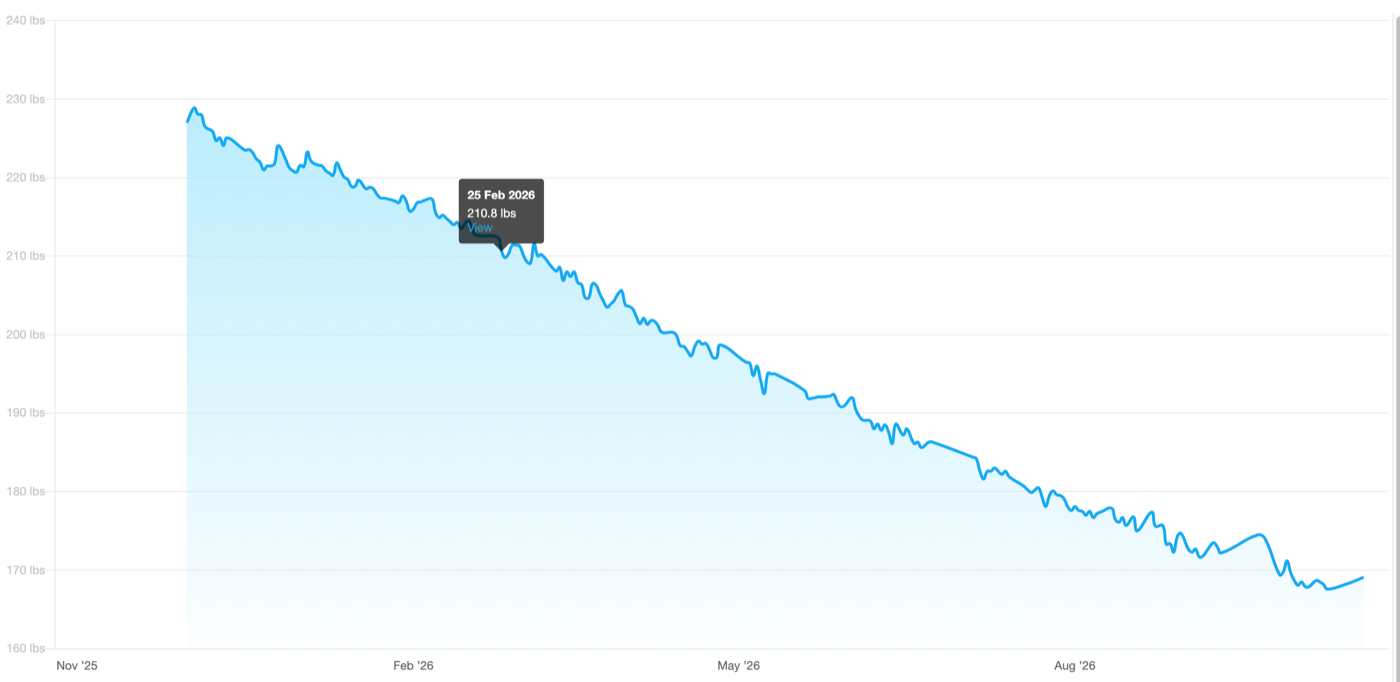
Simple, not easy, and slow on purpose. Fast loss often means muscle loss. A slower pace gives your body time to burn fat while you keep your strength. Expect some weeks where the scale barely moves, and watch the other signs too: how your clothes fit, how strong you feel, how you sleep, your energy at 3 p.m.
If you want this same plan laid out for any age or stage, read our simple plan that keeps muscle.
What Renee's Day Looks Like
This is Renee's day, built from the food she actually likes. It isn't yours, and it shouldn't be. Your day gets built from your fridge, your schedule, and the foods you'd never give up.
Breakfast: A breakfast burrito: egg whites, pico de gallo, two chicken sausages, and a wedge of Laughing Cow cheese in a high-fiber tortilla. Sometimes with an energy drink.
Lunch: Turkey on Dave's bread with light Laughing Cow cheese, a bag of Quest chips, and veggies. Or a big salad with lunch meat, shrimp, or chicken and a light balsamic.
Snack: Oikos Triple Zero yogurt, peanut butter and apples, beef jerky, or a protein bar.
Dinner: Steak with red potatoes and a vegetable. Taco night. Chicken with sweet potato and a salad. Shrimp salad with bread.
The food she won't give up: Crunchy peanut butter and M&M's. They're in the plan.
Movement: Long training runs on her weekend days, because she was preparing for four races in four days.
No skipped meals. No starving until dinner. No rules that fall apart at the first birthday dinner. Nobody's taking the food, the wine, or the weekend. And yours? Totally different. Because it's yours.
Mistakes to Avoid
- Crash diets. Very low calorie plans pull muscle along with fat, and they are hard to keep up. Most women we meet have done several and ended up right back where they started.
- Cardio only. Walking and cardio are good for your heart and your mood. On their own, they do little to protect muscle. Add lifting.
- Skipping protein. Coffee for breakfast and a salad with no protein at lunch leaves you hungry by 4 p.m. and short on what your muscles need.
- Eating too little. Cutting the bread, then the olive oil, then the peanut butter is the most common story we hear. If you feel tired, cold, low on energy, and stalled, you may be underfed. Sometimes the fix is eating enough, chosen well.
- Going all or nothing. One rough weekend doesn't erase anything. Treat it like a dimmer switch. Turn it down when life gets loud. Turn it back up at your next meal. No Monday restart required.
Some women in this season also use GLP-1 medication. If that's you, your muscle needs even more protecting. We cover it in GLP-1 Weight Loss: How to Lose Fat and Keep Muscle.
FAQ
How to lose weight in menopause?
Eat protein at every meal, lift weights 2 to 3 times a week, move daily, and sleep well. Lose fat slowly so you keep muscle. Skip crash diets.
How do I lose weight after menopause?
The same basics apply: enough protein, regular strength training, daily movement, and good sleep. Progress may be slower than it used to be, and that is normal.
Why is it so hard to lose belly fat during menopause?
Shifting hormones can change where your body stores fat, often more around the middle. Poor sleep and stress can add to it. You cannot spot reduce, but losing fat overall while building muscle helps.
Do I need cardio during menopause?
Cardio helps your heart, but it is not required for fat loss. Daily walking plus 2 to 3 strength sessions a week is a strong base. Strength work matters most for keeping muscle.
How much protein do I need in menopause?
Many women do well with a solid serving of protein at each meal, often 25 to 40 grams. Your exact needs depend on your body and health. A registered dietitian can help you set your target.